
Losing your job can feel overwhelming. More than 40 percent of American workers say they’ve experienced a layoff at some point in their career, according to the U.S. Bureau of Labor Statistics. Yet despite all the anxiety and uncertainty, most people never realize that a layoff is rarely about personal failure. Instead, this experience often signals bigger economic shifts and opens unexpected doors for career reinvention.
Table of Contents
- What Is A Layoff? Defining Key Terms
- Why Layoffs Occur: Exploring Causes And Impacts
- The Process Of A Layoff: How It Happens
- The Effects Of Layoffs On Employees And Businesses
- Coping With Layoff: Strategies For The Future
Quick Summary
| Takeaway | Explanation |
|---|---|
| Layoffs differ from firings | Layoffs are organizational decisions unrelated to individual performance, focusing instead on business needs. |
| Prepare for emotional recovery | Acknowledge feelings of loss and seek support to manage the emotional impact of a layoff. |
| Explore unemployment benefits | Understand available support resources like unemployment insurance to stabilize finances post-layoff. |
| View layoffs as opportunities | Consider layoffs as chances for professional growth and exploration of new career paths. |
| Develop a skill inventory | Assess your transferable skills to identify strengths and opportunities in future employment. |
What is a Layoff? Defining Key Terms
A layoff represents a temporary or permanent workforce reduction where employees are involuntarily terminated from their jobs, typically due to organizational restructuring, economic challenges, or business performance issues. Understanding this professional transition requires unpacking its nuanced definition and implications.
The Technical Definition
In employment terminology, a layoff differs from other forms of job termination. Unlike firing, which involves dismissal based on individual performance or misconduct, layoffs are systematic organizational decisions unrelated to an employee’s job performance.
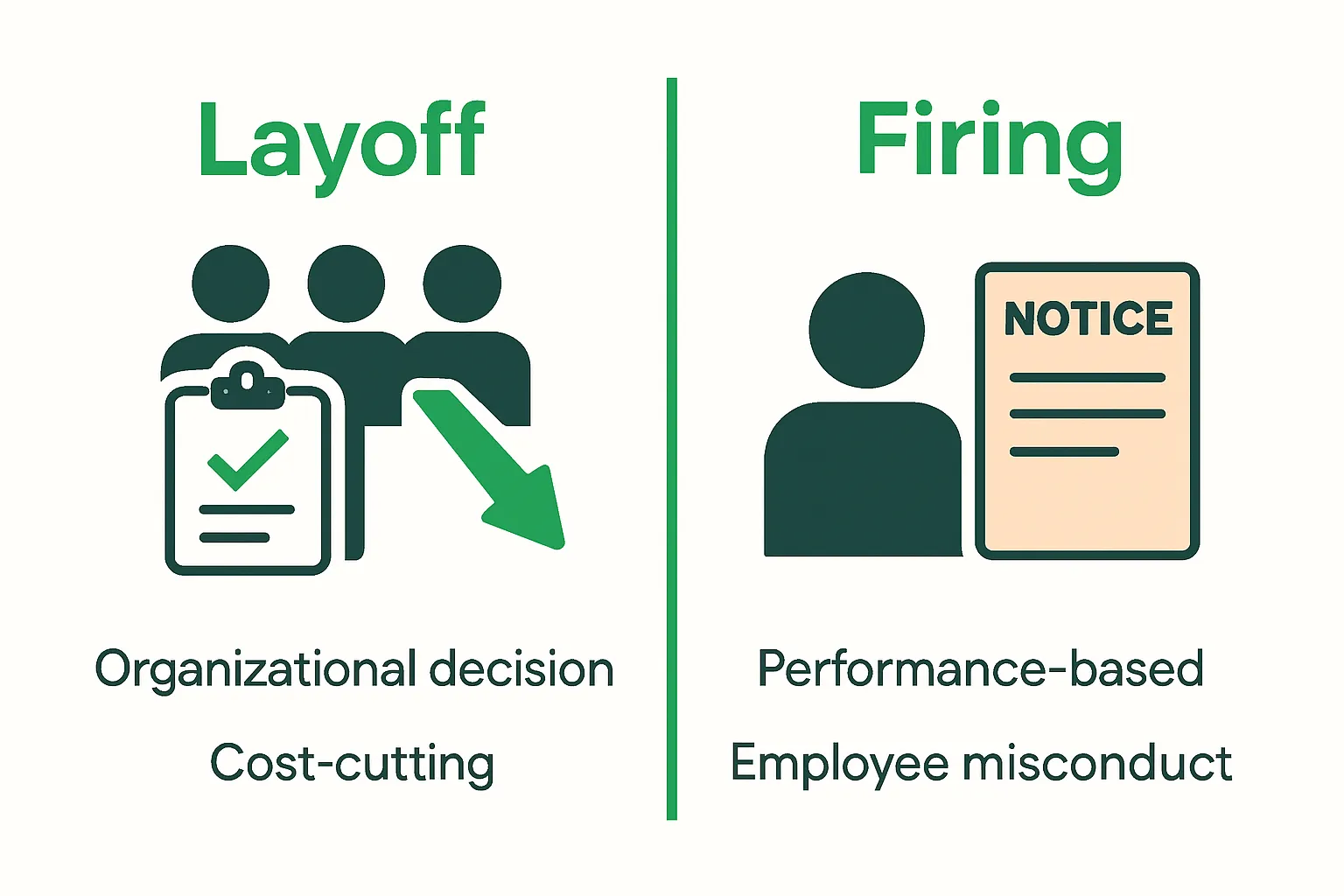 According to the U.S. Bureau of Labor Statistics, layoffs are considered mass workforce reductions that occur when companies need to decrease operational costs, restructure departments, or respond to broader economic pressures.
Key Characteristics of Layoffs
Layoffs are characterized by several distinctive features that set them apart from other employment terminations:
- Systematic Process: Not targeted at individual employee performance
- Organizational Strategy: Driven by broader business needs and economic conditions
- Potential Recall: In some cases, laid-off employees might be eligible for rehiring when business conditions improve
Moreover, layoffs can occur across multiple sectors and organizational sizes. Small startups and large corporations alike might implement workforce reductions based on financial constraints, technological shifts, or market disruptions. The fundamental principle remains consistent: the reduction is about organizational survival and strategic realignment, not personal shortcomings.
For employees experiencing a layoff, understanding these distinctions can provide critical perspective. It transforms the experience from a personal failure narrative to a broader economic and organizational challenge that many professionals navigate throughout their careers.
Why Layoffs Occur: Exploring Causes and Impacts
Layoffs are complex organizational decisions driven by multifaceted economic and strategic considerations. Understanding the underlying causes helps professionals navigate these challenging professional transitions more effectively and develop resilience.
Economic and Market Pressures
Companies initiate layoffs when external economic conditions create significant financial strain. Recessionary periods, technological disruptions, and industry transformations can rapidly alter business landscapes. According to research from the McKinsey Global Institute, economic downturns can trigger substantial workforce reductions across multiple sectors, with technology and manufacturing industries experiencing particularly dramatic shifts.
Organizational Restructuring Triggers
Layoffs frequently emerge from strategic organizational decisions aimed at long-term sustainability. Key restructuring scenarios include:
- Mergers and Acquisitions: Consolidating workforce and eliminating redundant roles
- Technological Automation: Replacing human labor with more efficient technological solutions
- Cost Optimization: Reducing operational expenses to maintain financial stability
Psychological and Professional Impact
The consequences of layoffs extend far beyond immediate job loss. Professionals experience complex emotional and career-related challenges. Financial uncertainty, decreased self-confidence, and potential career disruption can create significant personal stress. However, many individuals also view layoffs as unexpected opportunities for professional reinvention, skill development, and exploring alternative career pathways.
While layoffs represent challenging professional transitions, they are not indicators of personal failure. They reflect broader economic dynamics and organizational adaptation strategies.
Below is a table summarizing the core differences between layoffs and firings to clarify these key workplace concepts.
| Aspect | Layoff | Firing |
|---|---|---|
| Reason for Termination | Organizational decision, not personal performance | Individual performance, misconduct, or violation |
| Employee Performance | Not a factor | Primary factor |
| Potential Rehire | Sometimes eligible for recall | Rarely rehired |
| Organizational Intent | Cost reduction, restructuring, economic conditions | Address specific employee issue |
| Associated Stigma | Generally less | Typically more |
The Process of a Layoff: How It Happens
Layoffs are structured, methodical processes that organizations carefully design to minimize disruption and manage workforce transitions professionally. While each company approaches layoffs differently, there are standard protocols and legal considerations that guide these challenging decisions.
Initial Decision and Planning
Before executing a layoff, companies conduct comprehensive internal assessments. Senior leadership and human resources departments collaborate to evaluate organizational needs, financial constraints, and strategic objectives. This planning phase involves analyzing departmental performance, identifying redundant roles, and determining which positions can be eliminated with minimal operational impact.
Selection and Notification Criteria
Layoff selection is typically based on objective criteria to ensure fairness and legal compliance. Organizations often consider:
- Performance metrics: Historical job performance records
- Role criticality: Strategic importance of specific positions
- Business unit efficiency: Departmental productivity and contribution
According to the Equal Employment Opportunity Commission, companies must ensure their layoff selection processes do not discriminate based on protected characteristics such as age, race, gender, or disability. This means selection criteria must be transparent and applied consistently across the organization.
Legal and Ethical Notification Procedures
Once positions are identified, companies follow structured notification protocols. Affected employees typically receive direct communication from their managers or human resources representatives. This notification usually includes details about:
- Termination date
- Severance package details
- Continuation of benefits
- Potential job transition support
Professional organizations aim to handle these sensitive conversations with dignity, recognizing the significant personal and professional impact on employees. While layoffs represent challenging organizational transitions, transparent and compassionate communication can help mitigate negative psychological consequences for departing team members.
The Effects of Layoffs on Employees and Businesses
Layoffs create complex ripple effects that transform professional ecosystems, impacting both individual employees and organizational structures in profound and often unexpected ways. Understanding these multifaceted consequences helps professionals navigate these challenging transitions more effectively.
Individual Employee Impact
For employees, layoffs represent more than job loss. They trigger significant psychological and professional disruptions. The sudden loss of income, professional identity, and workplace community can generate intense emotional responses. Professionals often experience decreased self-confidence, increased stress, and potential financial instability. Career trajectory interruption becomes a critical concern, with many individuals facing uncertainty about future employment opportunities.
Organizational Consequences
Businesses experiencing layoffs encounter complex internal challenges that extend beyond immediate workforce reduction. The remaining employees frequently experience:
- Survivor’s Guilt: Anxiety about job security
- Decreased Morale: Reduced organizational trust
- Increased Workload: Redistributed responsibilities
According to research from the National Institutes of Health, prolonged workplace uncertainty can significantly impact mental health and organizational productivity, creating systemic challenges that persist well beyond the initial layoff event.
Long-Term Professional Adaptation
Contrary to potential negative perceptions, layoffs can also serve as unexpected catalysts for professional growth. Resilient professionals often view these transitions as opportunities to reassess career goals, develop new skills, and explore alternative career pathways. Entrepreneurial individuals might leverage their professional networks, transferable skills, and severance resources to launch independent ventures or pivot into more innovative professional domains.
While layoffs represent challenging professional disruptions, they are not insurmountable obstacles. With strategic planning, emotional intelligence, and a proactive mindset, professionals can transform these experiences into meaningful career development opportunities.
Here is a table outlining the common impacts of layoffs on both individual employees and the organizations where they take place.
| Impact Area | Employee Effects | Organizational Effects |
|---|---|---|
| Emotional Response | Stress, decreased confidence, financial anxiety | Survivors’ guilt, lowered morale |
| Professional Impact | Career disruption, need to reassess goals | Loss of expertise, increased workloads |
| Long-Term Outcomes | New skill development, exploring alternative opportunities | Ongoing productivity and mental health challenges |
Coping with Layoff: Strategies for the Future
Experiencing a layoff can be an emotionally challenging and professionally disruptive event. However, with strategic planning and a proactive mindset, professionals can transform this transition into an opportunity for personal and career growth.
Emotional and Mental Resilience
The first crucial step in navigating a layoff is managing emotional well-being. Psychological recovery plays a fundamental role in successfully moving forward. Professionals must acknowledge their feelings of loss, uncertainty, and potential self-doubt while simultaneously developing constructive coping mechanisms. This might involve seeking support from family, friends, professional counselors, or support groups specializing in career transitions.
Financial and Professional Realignment
Immediate practical steps are essential for stabilizing one’s professional and financial landscape. Key strategies include:
- Emergency Fund Management: Reviewing and potentially restructuring personal finances
- Unemployment Benefits: Understanding and applying for available support resources
- Skill Inventory: Documenting and assessing transferable professional capabilities
According to the U.S. Department of Labor, professionals should proactively explore unemployment insurance and potential retraining programs designed to support workers during career transitions.
Career Reinvention and Opportunity Exploration
Layoffs can serve as unexpected catalysts for professional transformation. Entrepreneurially minded professionals can view this period as an opportunity to reassess career goals, develop new skills, and explore alternative career pathways. This might involve pursuing additional education, investigating freelance or consulting opportunities, or even launching an independent business venture.
Successful navigation of a layoff requires a combination of emotional intelligence, strategic planning, and adaptable thinking. By approaching this transition with resilience and openness, professionals can not only recover but potentially discover more fulfilling and aligned career opportunities.

Turn Layoff Uncertainty Into Your Next Opportunity
Losing a job to a layoff is more than just a career interruption. It changes your sense of security and forces you to reevaluate your professional direction. This article highlighted the emotional and practical hurdles you face—from financial stress to questioning your next professional move. If you are searching for a way to turn this setback into a launchpad for change, you are not alone.
siift is designed to guide people just like you through uncertainty. Our intuitive AI gives you personalized feedback, reveals new insights, and maps out clear actions so you can confidently begin your journey as a founder. There are no gatekeepers and no pressure—just step-by-step guidance to help you reinvent your career. Discover how you can transform adversity into real possibility. Take the first step now at siift and see how quickly your goals move within reach. Let your next chapter start here.
Frequently Asked Questions
What is a layoff?
A layoff is a temporary or permanent reduction in workforce where employees are involuntarily terminated, usually due to organizational restructuring, economic issues, or business performance challenges.
How do layoffs differ from firings?
Layoffs are systematic organizational decisions and are not based on individual employee performance or misconduct, unlike firings which are typically due to performance-related issues.
What are the common reasons for layoffs?
Common reasons for layoffs include economic and market pressures, organizational restructuring such as mergers and acquisitions, technological automation, and cost optimization efforts.
How should I cope with a layoff?
Coping strategies include managing emotional well-being by seeking support, stabilizing finances through emergency fund management and unemployment benefits, and exploring new career opportunities or further education.
Recommended
- blog | siift | 7 Best Recession Business Ideas for New Entrepreneurs
- blog | siift | Founder Problems
- blog | siift | Work From Home Tips for Future Entrepreneurs and Solopreneurs
- blog | siift | What is Lean Canvas? Understanding Its Importance and Use
- What Is Unlawful Termination? What You Need To Know.
- Wrongful Termination A Complete Guide: Know Your Rights